
Understanding Pretending in Early Childhood
New Insights from Bristol University
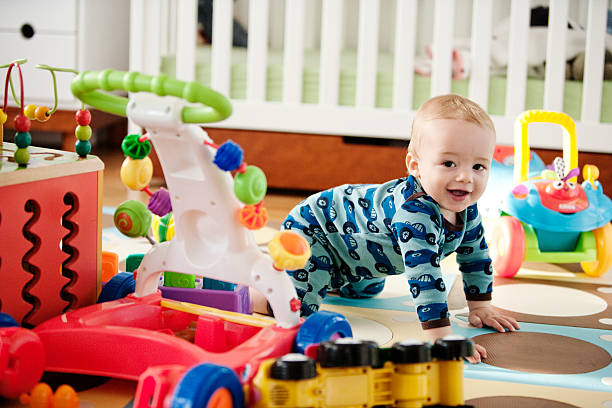
A ground-breaking study by Bristol University has shed light on understanding pretending behaviour evolves in young children, marking a significant leap in early childhood development research. The study reveals that some babies can recognize pretending as early as four months old. While by 12 months, around half of children are actively engaging in pretend play themselves.
The research, led by Professor Elena Hoicka, surveyed 900 parents from the UK, US, Australia, and Canada, tracking children’s development from birth to nearly four years old. The findings reveal 18 distinct types of pretend play that emerge and evolve during early childhood. This highlights the complexity and significance of pretending in cognitive and social development.
According to Professor Hoicka, “Pretending is a complex, evolving process which begins very early on in life, helping children’s cognitive and social skills to advance. It plays a key role in learning, creativity, making friends, and understanding others.” The researchers hope these insights will help parents and educators tailor pretend play to the appropriate developmental stages.
How Pretending Evolves
- Four to 12 months: Babies start to understand when others are pretending, with half of 12-month-olds engaging in their own pretend activities. This could include mimicking actions (e.g., pretending to sleep or drink from an empty cup).
- By Age Two: Children’s pretend play becomes more abstract, as they imagine objects as something else (e.g., a banana as a phone) and even pretend to be animals, people, or objects.
- By Age Three: Creativity flourishes, with children inventing scenarios, impersonating fantasy characters, and sometimes even interacting with imaginary friends.
Impact and Future Applications
The study offers a new tool for understanding early developmental differences. This could help parents, educators, and medical professionals adapt play to support children’s growth. Professor Hoicka notes that with further research, this framework could become a diagnostic tool for identifying developmental differences in early childhood.
This research underscores the importance of pretend play as a critical component of early childhood learning. It offers fresh insights into how children’s imaginative capabilities unfold from infancy through the preschool years.